Colm Currie
Writing things so you don't have to
Neil Francis Lennon’s Ten in a Row (ft Ronny Deila and Brendan Rodgers)
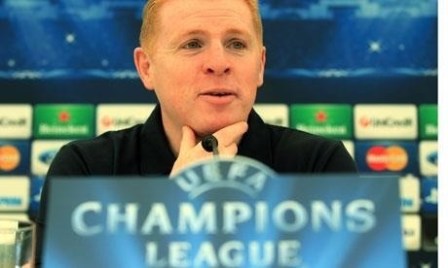
It’s been rather an emotional week for Celtic supporters, the upshot of which is that I have been moved to write a blog, which should tell you something about the severity of the situation. Brendan Rodgers, perhaps the club’s most successful manager of the 21st century, left very abruptly on Tuesday to join Leicester City, and was almost immediately replaced by Neil Lennon, perhaps the club’s most Celtic manager of the 21st century. The identity of Brendan’s successor will have surprised few, and while the suddenness of his departure was a bit of a shock, his leaving itself was hardly a surprise.
What has apparently been a surprise (to Brendan, at least) is the Celtic fans’ reaction to his going. If you’ve missed this news, allow me to catch you up – it’s been negative. With the club chasing an eighth successive league title and third consecutive Treble, and only 11 league games to go, he decided to jump ship and take over at a mid-table EPL club. Why a careerist football manager to whom this was just another job would do this would puzzle some Celtic fans, but make sense to others. Why a lifelong Celtic fan on the cusp of immortality among his fellow supporters would leave his dream job at this point is downright bamboozling. In fact, it would never, ever happen, and it’s that realisation that has hurt Celtic’s fanbase the most – we were tricked, taken in by a man who knew what we wanted to hear.
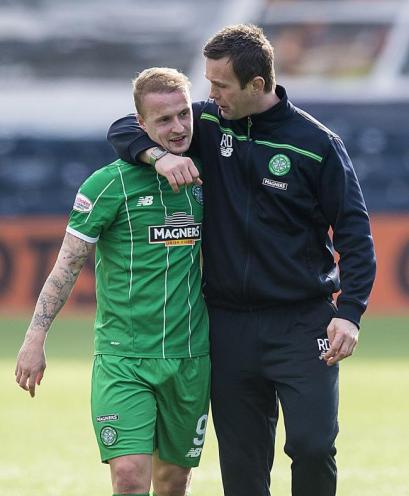
Following Neil Lennon’s first spell as Hoops boss, the relatively unknown Ronny Deila was appointed. Ronny had no previous connection with Celtic, but swiftly got what it was all about. He was a nice guy who signed some good players and played some entertaining football, while winning slightly more than the minimum required of him, but after two years, it was time to call a halt to the experiment. The support cried out for a Celtic man to take over. Step forward, Brendan Rodgers, a successful manager in the English Premier League, who was well liked and respected, and would normally have been out of reach for any club in Scotland. But he was between jobs, and had some affection for Celtic, so something that looked virtually impossible happened. He claimed to have been a Celtic fan all his puff, and said that he couldn’t pass up the opportunity to come to the club he had long dreamed of playing for and managing. The Paradise faithful lapped it up – the Anton Rogan story, the Danny McGrain story, the interactions with fans of various allegiances, all sounded very plausible because it was the kind of thing we wanted to hear.
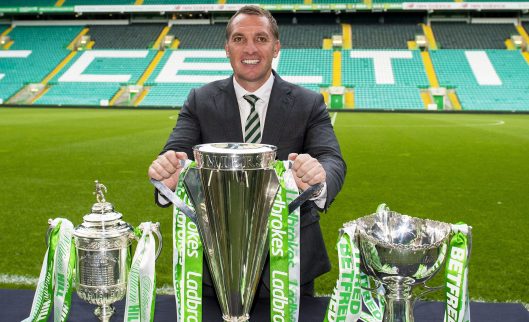
Brendan’s arrival was a big story, a sensational appointment, and almost universally welcomed by the support. His first season went better than anyone could have dreamed of. New players were signed. Matches were won. A successful Champions League qualifying campaign led to a very difficult group stage, one in which Celtic achieved some positive results despite being clearly out of their depth. The League Cup was won in November, and the League followed in April, sealed with a memorable 5-0 win at Tynecastle. At the end of May, the Scottish Cup was gift-wrapped by Tom Rogic, to deliver the Treble for only the fourth time in the club’s history, and all without losing a domestic game. It was all too good to be true, surely.
The unbeaten domestic run continued into Brendan’s second season. With the League Cup again secured, it ended after a record-smashing 69 games in December 2017, during which time the team had also managed to scrape a third place finish in the Champions League group stage. The following Europa League tie against Zenit St Petersburg ended in aggregate defeat after a home win, and a few more league defeats befell Celtic in the remainder of the season, but all three trophies stayed exactly where they were. Back-to-back Trebles, unprecedented in Scottish football, had surely written Brendan and his players into the history books.
The subsequent summer did not go well, though. Key players such as Stuart Armstrong and Moussa Dembélé left the club, the latter forcing a transfer on the last day, leaving Brendan’s side short of strikers. Further, areas where many fans felt the team needed strengthened, such as at right back and centre back, remained unsatisfactory at the close of the transfer window. A lacklustre defeat saw Celtic knocked out of the Champions League in the qualifying stage. Brendan showed rare frustration when discussing the window, and rumours that he was unhappy with the board and looking for the door intensified; indeed, it is still widely suggested that he almost left the club in the summer. But he stayed in post, and set about trying to win yet more trophies. Poor away form meant that Celtic’s lead at the top was less secure than in previous years, but a run of wins following the winter break left Brendan’s team 8 points ahead of their closest title rivals with 11 games remaining. Then, on the eve of a tricky away game at Hearts, with a Scottish Cup quarter-final away at Hibs to follow, he agreed to become the manager of Leicester City.
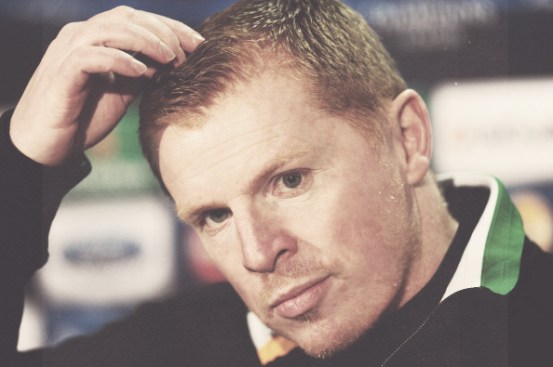
Brendan had been contracted at Celtic until 2021. Fans sang that he was here for ten in a row. In truth, most fans probably knew that it was unlikely he would stay beyond the end of the 2018-19 season. He wasn’t being challenged enough in Scotland, and Europe was beyond him. He had taken Celtic as far as he could, you might say. Except that he could have made history, as the man to oversee the tenth consecutive league title, something no football club has ever achieved. So why leave now? The answer is simple – this was only ever a job to him, not the passion project he claimed. For him to continue to pretend otherwise is disrespectful to the Celtic supporters who admired him so.
I must admit, I was initially astonished at most of the reactions from Celtic fans to the news of his departure. Indeed, I still am by some of the more extreme ones; there have been things said and written that are beyond unacceptable. For a football manager simply to leave a job is not a betrayal, an undermining of an exceptional legacy, or anything of the sort. But the manner of it, the timing of it, was a surprise and a disappointment to me. He had been linked with moves back to the English top flight before, but this one worried me, as the January transfer window had seen a number of short-term loan signings, not normally an indicator that the manager is planning on sticking around. I had hoped he would stay until the end of the season, leaving with another three trophies won and his legendary status secured. But no, he opted to go with things still up in the air.
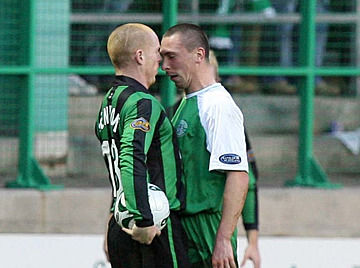
He has since acknowledged the hurt that Celtic fans felt, and claimed that Leicester would not wait until the summer. But, even if that is true, and there’s no reason to believe it is, let’s be realistic – he hasn’t gone to Leicester for Leicester, he’s gone for the Premier League. If he’d waited another few days, he could have gone to Fulham. If he had left Celtic in the summer, he could have waited until the first sacking of the season. He might even have had the chance to take over at Chelsea, where he was once a coach, with Maurizio Sarri’s position currently in doubt. He would have had other opportunities to go back to the Premier League, no doubt about that. But no, even the possibility of being idolised for years to come was not enough to make him endure just another few months in the backwater of Scottish football for which he clearly felt he was too good. That hasn’t just hurt Celtic fans, it has insulted them deeply. Once he knew Leicester wanted him, we weren’t worth a second thought. A couple of pre-scribbled answers to predictable questions at a press conference, and that’ll be that. Maybe I’ll come back some time, he claims, but why would he? And would he be welcome? Doubtful.
Brendan has suggested that in time, the fans will understand, he will be forgiven, and his success will be appreciated. Well, he might get two out of three if he’s lucky. Football fans have long memories, but hurt does fade over time, people become less angry, and he might be forgiven. He won too many trophies and oversaw too many important wins and good goals for his success ever to be ignored. He did these things for Brendan Rodgers, we now realise, not for Celtic, but we enjoyed them, and will eventually look back on these times with more fondness than bitterness. But asking Celtic fans to understand why a “Celtic fan” would leave Celtic in the manner he did, and at the time he did, to go to Leicester City, is pie in the sky fantasy nonsense pish. To a Celtic fan, there is no bigger club, no better opportunity, no reason to abandon your team like that. If he’d been more honest, and simply said that Celtic was a club he was fond of, and he’d be here for a while until he got bored of it and wanted more cash, he wouldn’t have had quite as positive a reception, but his success would have been greeted just as warmly, and his departure with more acceptance. I expect the anger at him will die down in time, and his work will go back to being well thought of, but he will never enjoy the kind of status among Celtic fans our other Northern Irish managers have done.
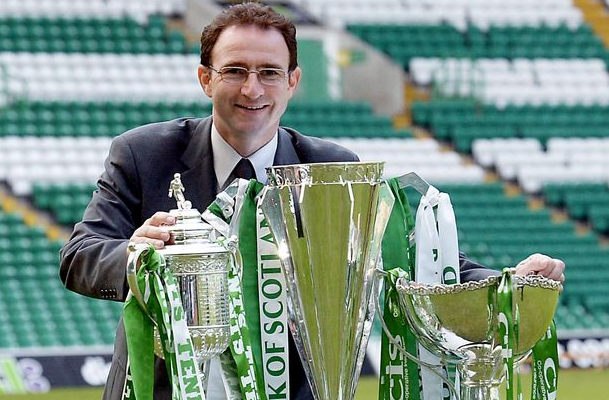
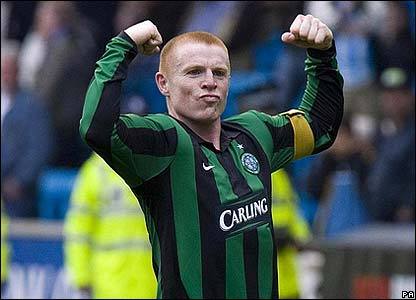
Which brings me very neatly, and at long last, back to my point – Neil Lennon is back, perhaps to finish what he started when he won the first three of Celtic’s current run of seven and counting league titles. He has only been appointed for the rest of the season for now, but he is certainly a candidate for taking the job permanently. Opinion on whether he should be offered it is divided, and what happens will surely depend on how he does in the short term. The fact that he’s in the job for now, though, does suggest that it is his to lose.
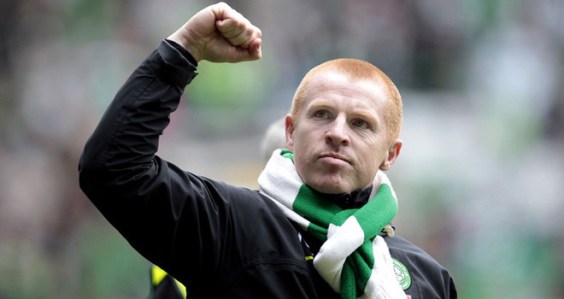
My view, which many won’t share, is that he’d be a very sensible and good choice. Yes, he’s an easy option, and yes, an obvious candidate, and yes, his appointment would be seen as not terribly ambitious. But his record at Celtic, both domestically and in Europe, is very good. He knows the club, he knows a lot of the players, and he knows how important it is to win three more titles. He has a winning mentality and he has a history of setting up his team to win difficult matches. Already, two games into his second spell, he has dug deep and won two tough and vitally important fixtures. A late winner at Hearts ensured that Celtic stayed eight points ahead, and an impressive second half against Hibs sealed a place in the Scottish Cup semi-finals. Neil’s cup record at Celtic is patchy, to say the least, having won two Scottish Cups out of five attempts and no League Cups out of four attempts in his first spell, losing out several times to teams who Celtic were expected to beat comfortably. This is far less important right now than winning leagues, though, and Neil certainly knows how to do that. His team was also much more successful and more convincing in Europe than Brendan’s was, he has a better win percentage, and he has (in my opinion, at least) a better record when it comes to signing players.
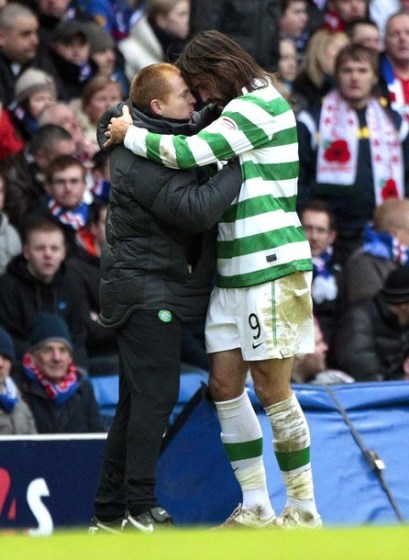
There have been various names mentioned, and this will continue until the club announces a permanent manager. Less well-known successful managers who work in continental European leagues will be suggested and debated by fans. Premier League and Championship managers that we might have an outside chance of persuading to come to Scotland. Former Celtic players who might want to come back and take on the job. Some will be popular suggestions; others less so. Some will be realistic; others will not. Neil Lennon may turn out to be the only person who ticks both of these boxes. I’m not saying that Neil Lennon should necessarily be the next permanent Celtic manager, but we know what to expect from him. He loves the club, he understands the club, and he will work his hardest for the club. Anyone else taking on the job, apart from the very best managers in the world, who are surely out of Celtic’s reach, would be a bit of a risk. They would have to hit the ground running, with European qualifiers starting very early next season, and a squad overhaul required. A number of players look likely to leave in the summer, some with loan deals ending, some with contracts running out. There are also positions that need strengthened, mainly in defence and up front. The last time Celtic’s squad needed such a comprehensive rebuilding, the man who oversaw it was Neil Lennon, and he brought in a number of high quality players (Forster, Izaguirre, Hooper, Ledley, Kayal, Stokes, and Mulgrew among them). He has a track record of winning games that he really needs to win, and of motivating his players and getting more out of them than expected. All of these qualities are things that Celtic could really do with right now, both in the short term and further ahead. Neil has the opportunity over the next couple of months to show that he wants the job and that he should be given it. I have no doubt he will give everything for Celtic as he tries to make his case.
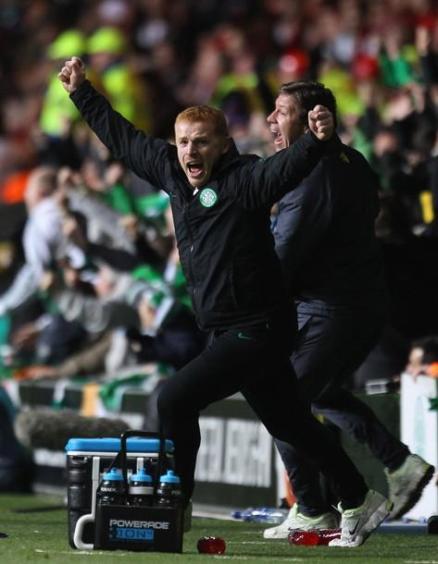
Whoever is in the dug out for Celtic, I will back, and I hope my fellow supporters are of the same mind. The key thing is, though, this isn’t about individuals at the moment. This is a collective effort. Anyone in it for themselves might make a useful contribution, but when their own interests and Celtic’s diverge, they will ultimately act for number one. If we’ve learned nothing else, we have learned that we need a manager and players who will put Celtic first. Neil Lennon will relish the opportunity to finish what he started, or if it’s not given to him, at the very least the chance to deliver title number eight of a potential ten. He has made an excellent start to phase two. “Keep winning,” sounds like a simple instruction, but it’s not easy to implement. Unless, of course, you are Neil Lennon. He has the chance to improve upon an already incredible legacy. The fact that this is not his primary motivation might well be the thing that makes it happen.


Pingback: Celtic’s Managerial Conundrum | Colm Currie