Colm Currie
Writing things so you don't have to
Seven reasons why Netflix is the perfect platform for the return of ‘Arrested Development’
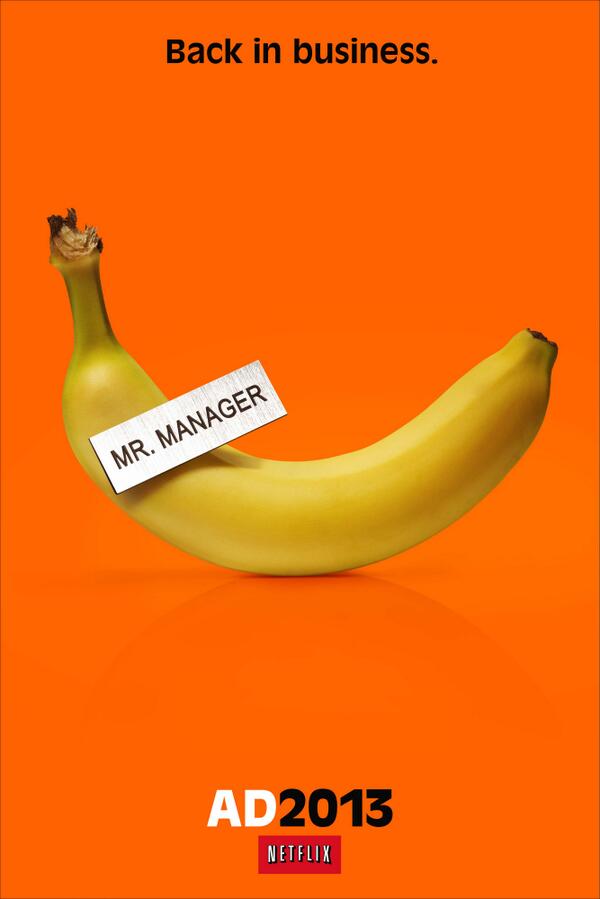
Unless you’ve been living under a rock, you probably know that Arrested Development is coming back next month. The 26th of May 2013, to be precise, with 15 brand new episodes, all of which will debut on Netflix at 00.01 (Pacific Time), which will be 08.01 in the UK. The internet is excited.
Arrested Development first appeared in 2003, and aired 53 episodes before being cancelled in 2006. Its ratings never matched its brilliance, nor do they match its current popularity, with perhaps millions of people (myself included) having subsequently discovered the sitcom on DVD. For many, it is the greatest sitcom of all time. That is high praise indeed, with which I don’t fully agree, but it’s easily in my top five, and it’s by far the cleverest. I’m very much looking forward to its return.
The main difference this time around will be, rather than airing a week apart on Fox, the entire series will be available to watch at once (in theory; I have no idea what high demand will do to Netflix’s server). While I’m still a tad skeptical about this “new TV,” I think it’s the perfect fit for this particular show. Here’s why.

1. Repeat viewings
When Arrested Development was on the first time around, it was described as being designed for the TiVo era (that’s Sky+ for you Brits). A show that had to be watched more than once to appreciate all the jokes. I recently finished watching it all the way through for the fourth time, and there were still several jokes or references that I’d missed, and there are probably a few I still haven’t spotted. Some are subtle, some are in the background, some are foreshadowing future events, some are going on at the same time as other layers of jokes. Either way, Arrested Development was designed to be watched over and over again, so brilliantly intricate is the writing. With Netflix, people can easily do this, and will, even if they just sign up for the one month free trial.
2. Block viewings
For similar reasons, Arrested Development is also very much suited to watching a pile of episodes back-to-back. There are story threads and symbolism which, while usually not essential to understanding the plot, are funny and definitely worth noticing, and would be easily missed by watching episodes days or sometimes even hours apart. I haven’t yet decided how I will watch the new season (at the moment, I’m thinking I’ll watch them all in one day, then rewatch at a rate of one or two per day, then perhaps a second rewatch to make sure I got it all), but I enjoyed the original three seasons more when watching them in bulk. I don’t know if the show was designed this way, but it certainly works well.

3. Rewinding and checking previous episodes
With so much going on, I often find myself rewinding the DVD version of the show for missed lines or background action. With things like TiVo and Sky+, this is now possible with live broadcasts, of course, so Netflix isn’t absolutely required for something like this. But there are often (apparent) throwaway lines on Arrested Development which make me think of something a character said or did two or three episodes earlier, and I want to go back and check to see exactly what the joke is, or if they’re foreshadowing something that’s yet to happen.
Information about the new season has been drip-fed to us but, based on what a few people involved in the show have said, I think that’ll be even more the case with the new episodes than with previous ones. It seems as though the events in episodes which focus on some characters will be happening at the same time as events in other episodes, meaning that there will be yet more things to check up on. That might be part of the design of the show because it’s going to be on Netflix, as opposed to something that’ll be enhanced by Netflix, but I think it’s a valid point nonetheless.
4. 30-minute episodes
Simple enough – more bang for your buck. Rather than running to 22/23 minutes so that ad breaks fit nicely into a half-hour slot, the new episodes will each run to 30 minutes. (I’ve also seen an article which says they vary in length but average around 30 minutes, which is another good thing about Netflix, you’re not bound to a precise schedule.)

5. No ad breaks
Nobody enjoys ad breaks, but since that’s how networks make their money, they’re going nowhere. Since Netflix is funded by subscriptions, however, they have no need for them. As well as the annoyance of watching the ads or having to skip through them, the lack of ad breaks in the new season will be good for the flow of the story too. Arrested Development was a traditional sitcom in almost no way, and didn’t fit into the two or three act structure, with the cuts feeling as though they were only there because they had to be. Of course, the ad break is the reason the American sitcom traditionally has two or three acts to an episode, but most worked within that framework, whereas Arrested Development seemed reluctant to do so. Now it won’t need to, with breaks in the narrative (presumably) occurring only for storytelling reasons.

6. Characters can be omitted from certain episodes
Bear with me on this one, because I think my point is difficult to explain and easy to misunderstand. I love all of the members of the Bluth family, and I’m very excited by their return, but I felt that there were some episodes in the original series that could have done without one or two of them. As mentioned above, there’s so much going on in any given episode; you could have a Michael story, a Gob and Tobias story, a George Michael and Maeby story and a Lucille and George Sr. story. With all of this going on, there’s not a lot of room for Buster and Lindsay, but contractual obligations might have meant they need to appear in at least one scene, thus taking away screen time from the stories. I would prefer to have the less relevant characters sit that episode out, and when it’s their stories up the following week, we could have George Sr. and Maeby omitted, for instance.
For what I believe to be partly-financial, partly-artistic reasons, each episode of the new season will focus on one member of the family in particular, with the others making appearances here and there, rather than all at once. I read an interview with David Cross the other day, in which I was disappointed to learn that Tobias has no scenes with George Sr. or George Michael in the new season (his scenes with the former in particular have produced some great moments). However, I think this is a good and interesting approach to the new season, showing where each Bluth has been in the seven years since we last heard from them, and how they all come back together (with any luck!) for a film very soon.

7. Play to your audience
It’s very difficult to know the ins-and-outs of the Arrested Development-loving demographic, since so many of the show’s current fans weren’t aware of the show when it was on, but I’d be prepared to bet the vast majority will fall within the 18-49 bracket. (I’ve always felt that was a pretty wide and diverse age range, but that’s one that they use, I’m told.) Many will be students and young professionals, and many will own a laptop or games console that they use as their sole or primary media device. With Netflix now streaming direct to PS3s, X-Boxes and Wiis, it is a platform currently used by a large part of Arrested Development’s audience, and for those who don’t already use Netflix, it’s very easy to set up.
It’s in the interests of the producers of Arrested Development to use Netflix as the platform on which to bring back the series, for the reasons outlined above and perhaps more, but is it a good business move for Netflix? At only £5.99 a month (in the UK, prices elsewhere vary as I understand it), with the option to cancel anytime, it’s not a big financial commitment for anyone to sign up just to watch the new Arrested Development, and I imagine many people will do so. Netflix must be banking on a lot of them sticking around once they see their selection of content.
I can see some problems there straight away. I first signed up for a Netflix (UK) free trial month about a year ago, and was disappointed by the amount of stuff on there. It’s a good, easy-to-use service, but without the range of content available in the US and elsewhere. I cancelled before my month was up. I was recently invited back for another free week, which I took up, and saw that Netflix has expanded its range significantly, but there are still gaps. A lot of people won’t be convinced to keep it on.
There’s also nothing that I can see stopping people from continually signing up for a free trial with different email addresses, if they’re so inclined. I have no idea how Netflix is doing financially, although I assume they must be faring reasonably well, but I can’t see how they’ll make much money from Arrested Development. Existing members won’t pay any more to see the new episodes, and new members can see them for free. I assume their plan is to break even or make a small loss, and use the publicity to attract others into making original content with them.
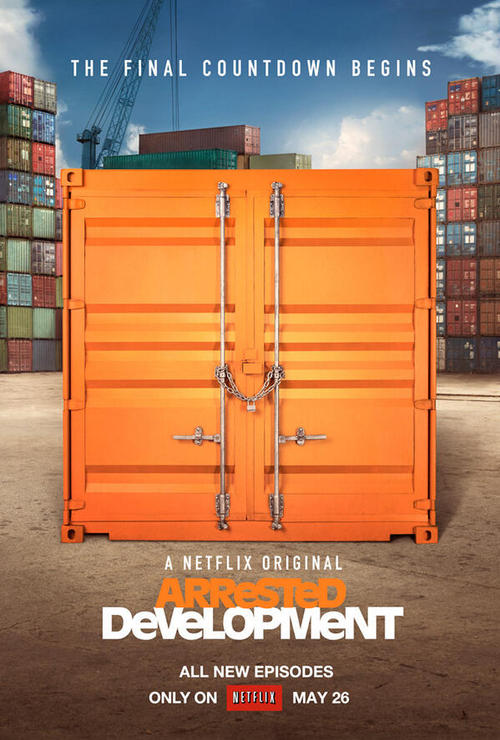
Like I said, though, I have no information about Netflix’s finances or business, this is largely speculation. I’m just getting impatient as we reach The Final Countdown to new stories of the wealthy family who lost everything, and the one son who had no choice but to keep them all together.
 Colm Currie
Awesome. I agree.
It’s nearly impossible to find well-informed people for this topic, however, you sound like you know what you’re talking about!
Thanks